 Klose Coaching
Organizational Decision Systems
Organizational Decision Systems
We are the leading experts in the field of Organizational Decision Systems.
Lukas Klose set out the case for building decision-making capability on purpose in an article published by Scrum Alliance in 2026. Our model of how organizations decide draws on four research traditions, and it is backed by twenty-seven years of leading delivery and organizational change.
The results your organization cares about, from revenue to delivery dates, come out of thousands of daily decisions. The system those decisions run through can be seen, measured and redesigned, and we help leaders do that work in their own organization.
What is an organizational decision system?
An organizational decision system is the set of decision rights, routines, information flows and feedback loops through which an organization makes, carries out and corrects its decisions. It settles who may decide, what they know, how groups reach a choice and how quickly errors surface. Klose Coaching helps leaders measure and redesign that system.
Every organization already has one. It grew one policy, one approval step and one meeting at a time, and in our experience it rarely has a single owner. That helps explain why two companies with equally capable people can decide at very different speeds and with very different results.
Try this on one decision from last week
Pick one decision that reached you last week but did not need your judgment. Why did it reach you?
-
Nobody else is allowed to make it. That is a rules problem, and rules can be rewritten.
-
Someone is allowed, but would not risk it. That is a consequences problem. People have worked out what happens to someone whose call goes badly, and handing them more authority is unlikely to change that.
-
It is unclear who is allowed. That usually means nobody ever designed it.
All three look the same on your calendar, and each has a different fix, so it is worth knowing which one you have before you change anything.
What an organizational decision system is made of
We look at a decision system in three parts, with a fourth thing running through all of them.
-
Who may decide
Decision rights and escalation paths, how strategy turns into real commitments, how incentives pull on choices, and the meetings and hand-offs a decision has to pass through.
-
How the organization thinks it through
The skill of the people deciding, the way groups combine what each person knows, where expertise can be trusted, and where technology and AI take part in the reasoning.
-
How it notices it was wrong
How warning signs travel to someone who can act, how fast mistakes are caught and reversed, and whether lessons turn into changed routines.
How decisions move Running through all three: how long decisions wait, where they queue, and how often they come back for rework.
How we improve each part
For any part of the system, there are five things worth doing, and we start with the first:
- Measure it, so you can see where decisions wait, come back for rework or produce surprises.
- Strengthen it, so decisions in that area get better.
- Keep it from decaying, since skills tend to fade when automation takes over, and authority tends to drift back up the hierarchy.
- Put it to work, by routing decisions through it and using what it produces.
- Make results depend less on luck, so the outcome no longer hinges on which person happened to get the decision.
Why a strong decision system is so powerful
Decision effectiveness tracks financial results.
In a Bain & Company study of nearly 800 companies, decision effectiveness and financial results moved together in every country, industry and company size the researchers looked at. Companies in the top fifth for decision effectiveness returned nearly six percentage points more to shareholders than the others.
A large share of leadership time goes into deciding, and much of it is lost.
In a McKinsey survey of 1,259 respondents, published in 2019, only 20 percent said their organization excels at decision making, and 61 percent said most of their decision-making time is used ineffectively. McKinsey estimated that for the managers of an average Fortune 500 company this could add up to more than 530,000 days of lost working time a year.
The system around people shapes their decisions.
Put a strong decision-maker into a poorly designed system and the system tends to win: they see less, wait longer and get caught out later. A capable person still needs timely information, clear authority and a way to learn when a call goes wrong, and those conditions can be designed once for thousands of decisions.
The design shows up when times get hard.
Economists studying the Great Recession found that more decentralized firms, where decisions sat closer to the front line, outperformed their centralized counterparts in the sectors that were hardest hit.
It decides what AI can do for you.
AI tends to speed up the decision system it works within, the good parts and the broken ones alike. As Lukas Klose argued in his 2026 Scrum Alliance article, organizations with strong decision infrastructure are likely to benefit far more from AI than those without it. More on this on the AI page.
What people say
- “Everything escalates to me.”
- “We are too slow.”
- “Everything needs sign-off from five people.”
- “The strategy is clear but nothing lines up with it.”
- “Finance / Legal / IT is the blocker.”
What may sit underneath
One shared cause
for example, nobody is sure who decides what
An example pattern, not a diagnosis
Where the expertise comes from
The parts of this discipline are studied today in four separate fields: organization design, management cybernetics, military command and control, and safety and resilience science. Each one explains part of how an organization decides, and in our research they seldom cite one another. Our work joins them around one object, the decision system, and puts it in language a leadership team can act on.
- A published argument. Lukas Klose’s article Scrum Beyond Teams: A Perspective on Organizational Decision-Making Capability was published by Scrum Alliance in March 2026. Read it.
- An evidence base we keep ourselves. We maintain a research ledger on how organizations decide. Claims we teach are tied to their sources and graded for how well they hold up, and we record the findings that cut against us as carefully as the ones that support us. The studies on this page are drawn from it.
- Twenty-seven years of practice. Software engineering, large-scale delivery and organizational change, including leading a 75-person delivery organization with a portfolio of more than $20 million a year.
- Teaching leaders for a living. Lukas teaches two of the five courses on the Agile Leadership Certificate at the UBC Sauder School of Business, and has delivered courses to the Federal Reserve Bank of New York, RBC, HSBC and WorkSafeBC, among others.
How we help organizations excel at deciding
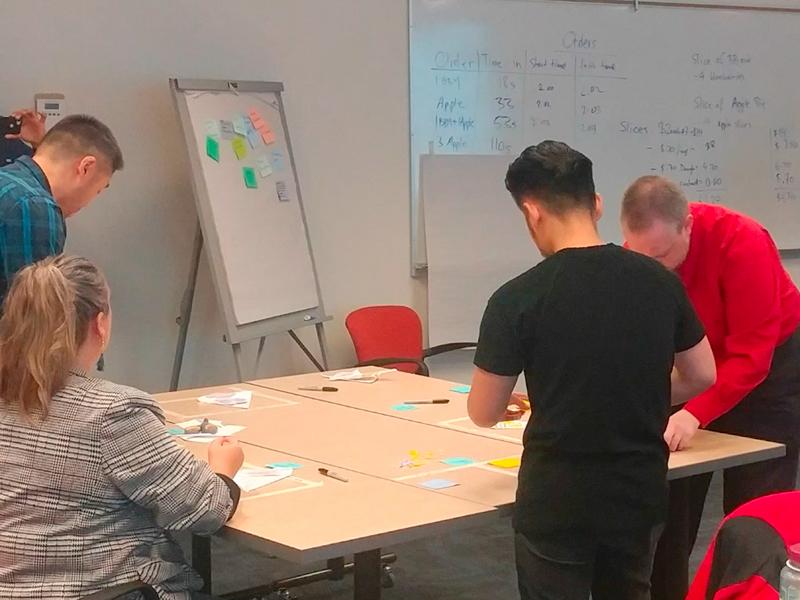
The work starts with your own decisions. We use a real case from your organization from the first hour, so you leave with a read on your own system and a change you can make.
To talk about your organization, write to lukas@klose-coaching.com.
Questions about organizational decision systems
What is an organizational decision system?
An organizational decision system is the set of decision rights, routines, information flows and feedback loops through which an organization makes, carries out and corrects its decisions. It settles who may decide, what information reaches them, how groups reach a choice and how quickly a wrong call is noticed. Every organization has one, usually grown piece by piece. Klose Coaching helps leaders measure theirs and redesign the parts that hold it back.
How is an organizational decision system different from decision intelligence?
Decision intelligence usually means using data, analytics and AI models to support particular decisions. An organizational decision system is wider: it is the standing structure that decides who gets that analysis, who is allowed to act on it, and how the organization notices when the result was wrong. Good decision intelligence tools feed a decision system. On their own they do not change who decides, how fast, or how errors get caught.
How is an organizational decision system different from decision science or decision-making training?
Decision science studies how to make good choices under uncertainty, and most decision-making courses teach individuals and teams to apply it to the decision in front of them. Organizational decision systems work one level up, on the organization’s standing capacity to decide: the decision rights, routines, information flows and feedback loops that every decision passes through. Better individual judgment helps, and a well-designed system makes that judgment count across thousands of decisions.
Is an organizational decision system the same as governance or organization design?
An organizational decision system overlaps with both. Organization design and governance set structure, roles, reporting lines and who approves what, and a decision system includes those pieces. A decision-system view also follows what happens in use: what information reaches the person deciding, how long a choice waits, and how quickly errors are found and corrected. Klose Coaching looks at those working patterns alongside the formal structure.
How do organizational decision systems relate to agile?
Agile frameworks such as Scrum are decision systems for teams: they put decisions close to the information, bring different perspectives together and use short feedback loops to learn. The trouble starts above the team. Handing teams decision rights does not by itself give the organization the capability to use them, and authority tends to drift back up the hierarchy. A decision-system view looks at the whole organization those teams sit in. See our agile courses.
How does AI change an organization’s decision system?
AI tends to speed up the decision system it works within, good parts and broken parts alike. As it takes over more of the routine work, deciding becomes a larger share of what people do, and the human decision step tends to become the part that limits the gain. Organizations with clear decision rights, good information flow and fast error correction are likely to get far more from AI than those without. Klose Coaching helps leaders build that foundation. See AI in your organization.
Who needs to work on their organizational decision system?
Leaders who can change how decisions are made across more than one team, such as executives, business unit heads, functional leaders, and transformation and AI leads. Typical signs are decisions that keep escalating to the same few people, decisions that get reworked or quietly walked back, AI projects that work technically but stall in the organization, and strategies that never quite turn into commitments. If any of those sound familiar, the decision system is a good place to look.
Read more and join the conversation
- Scrum Beyond Teams: A Perspective on Organizational Decision-Making Capability, by Lukas Klose, first published by Scrum Alliance
- The Organizational Decision Systems group on Meetup (“Better Decisions. Better Organizations.”), where Lukas hosts short online sessions
- The organizational decision systems glossary and how the field compares with its neighbours
Led by Lukas Klose. To talk about your own organization, write to lukas@klose-coaching.com.